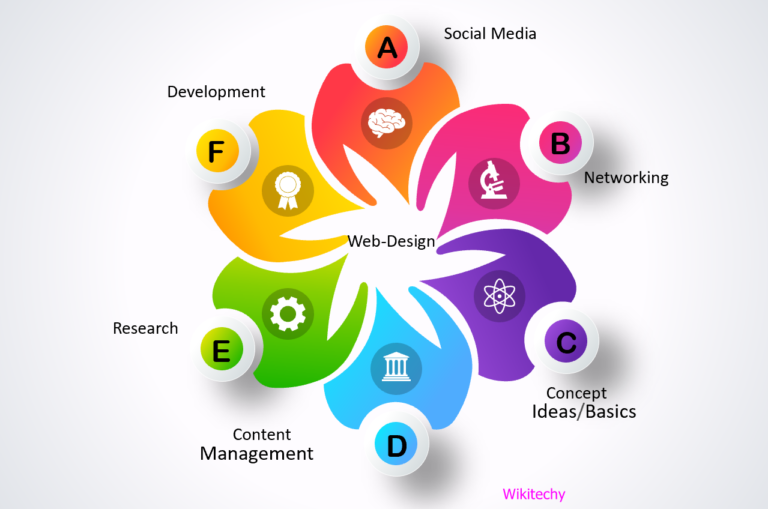
What Does Web Design Mean? A Comprehensive Guide
A modern web design dashboard showing responsive layouts, real-time performance metrics, accessibility scores, SEO rankings, and user behavior heatmaps across desktop, tablet, and mobile devices.


A futuristic software development dashboard where AI agents collaborate with human developers on adaptive code architecture.
Custom software development used to mean long planning cycles, rigid requirements, and months of manual coding. Requirements gathered upfront rarely matched reality six months later. Deadlines slipped. Budgets ballooned.
Cognitive AI changes everything. Modern systems don’t just generate code; they understand business context, predict changing needs, and evolve alongside your operations. Custom software development becomes a living partner, not static deliverables.
This shift moves development from linear processes to adaptive intelligence. Your software learns your business patterns and improves continuously.
Cognitive AI goes beyond pattern matching. It reasons through complex problems, maintains context across sessions, and makes decisions that align with business goals.
In custom software, that means AI can analyze your current systems, understand legacy constraints, propose modern architectures, and even simulate how changes impact performance before a single line gets written.
The result? Development cycles shrink from months to weeks while quality improves.
Traditional custom software relied on human expertise across disconnected layers. Each specialist handled their piece: frontend, backend, database, and DevOps. Handoffs created friction.
| Era | Planning | Development | Testing | Deployment |
| Pre-AI | 3-6 months | 6-12 months | 2-4 months | Manual |
| Cognitive AI | 2-4 weeks | 4-8 weeks | Continuous | Autonomous |
AI collapses these timelines by working across layers simultaneously. Humans focus on strategy while AI handles execution.
Early AI tools like GitHub Copilot wrote functions from prompts. Useful, but limited to tactical coding. Cognitive systems do strategic architecture.
They analyze your entire tech stack, identify bottlenecks, propose microservices migration paths, and even draft complete API contracts before development begins. Your developers review architecture instead of writing boilerplate.
This shift frees senior engineers for complex problem-solving while AI handles the repetitive 80%.
AI analyzes legacy code architecture and proposing modern microservices migration paths with performance predictions.
Cognitive AI introduces software agents that run independently. These aren’t chatbots, they’re specialized workers handling specific development tasks.
One agent might monitor production systems for performance degradation. Another handles security vulnerability scanning. A third orchestrates CI/CD pipelines based on real-time business priorities. Internal business app development makes these agents even more powerful for operational workflows.
Teams get dashboards showing agent activity, intervention points, and performance impact. Humans stay in the loop for critical decisions.
Traditional requirements said “build feature X.” Cognitive AI asks “why build feature X?” It pulls from CRM data, customer feedback, usage analytics, and market trends to validate assumptions.
For example, if sales teams request a new reporting dashboard, AI cross-references usage data showing existing reports go unused. It suggests simpler self-service analytics instead, saving 3 months of dev time.
This context-awareness prevents building features nobody wants.
Cognitive AI redefines every phase of custom software delivery.
AI scrapes existing systems, documents APIs, maps data flows, and identifies technical debt automatically. No more weeks of manual discovery. Learn more about AI app development.
Generative AI creates multiple architecture options with tradeoffs for scalability, cost, and maintainability. Teams pick the best fit instead of guessing.
AI pairs with developers, writes tests, handles refactoring, and documents as it codes. Human developers focus on business logic and edge cases.
AI generates comprehensive test suites, runs security scans, and simulates production load. Flaky tests become historical artifacts.
Zero-downtime deployments orchestrated by AI with automatic rollback if anomalies are detected. Your ops team sleeps through releases.
Most businesses run on decade-old systems. Migrating monolithic apps to cloud-native microservices used to mean multi-year projects with high failure rates.
Cognitive AI maps dependencies, simulates migration scenarios, generates wrapper services for gradual decoupling, and validates business continuity throughout. Migration risk drops 80% while speed increases 5x.
Your ERP from 2010 becomes a modern API gateway without rewriting millions of lines.
Traditional security scans for known vulnerabilities. Cognitive AI predicts attack vectors before they exist.
It analyzes your codebase for security patterns, simulates attacker behavior, and suggests architectural fixes. Deployment pipelines include AI-driven threat modeling that adapts to new attack surfaces automatically. Web development services incorporate these security layers from the start.
Compliance becomes continuous monitoring instead of annual audits.
Developers don’t get replaced; they evolve. Junior roles shift toward AI orchestration and prompt engineering. Senior engineers become solution architects, guiding cognitive systems.
New roles emerge: AI workflow designers, cognitive system integrators, business-AI translators. Your team gets smaller but dramatically more productive. Check how mobile app development teams are adapting to this shift.
Traditional custom software cost 70% labor, 20% infrastructure, 10% tools. Cognitive AI flips this to 20% human time, 10% AI platform costs, 70% business value delivery.
Monthly AI platform fees replace annual developer salaries. Scalability becomes nearly linear as cognitive systems handle complexity growth automatically.
Forward-thinking companies already see results.
These aren’t theoretical. Teams using cognitive AI stacks report consistent gains across industries.
| Task | Pre-AI Hours/Week | AI Hours/Week |
| Boilerplate coding | 25 | 2 |
| Debugging | 15 | 3 |
| Testing | 12 | 1 |
| Documentation | 8 | 0 |
| Architecture | 5 | 20 |
| Business strategy | 5 | 24 |
The shift creates space for high-value work while AI handles execution.
Cognitive AI doesn’t rip-and-replace your stack. It enhances what works.
Salesforce? AI generates custom Apex triggers and Lightning components from natural language requirements. Your admins stay productive.
Shopify? AI builds custom apps, optimizes checkout flows, and A/B tests pricing dynamically. Explore search engine optimization strategies that work alongside these systems.
SAP? AI creates intelligent middleware translating between legacy BAPIs and modern REST APIs.
Your existing investments compound instead of becoming obsolete.
Open cognitive platforms prevent dependency on single providers. Teams mix-and-match best agents for each task, LangGraph for orchestration, Cursor for coding, and Windsurf for debugging.
APIs standardize agent communication. Your architecture becomes modular, not monolithic.
Cognitive systems need guardrails. Modern platforms include approval workflows, audit trails, and human-in-the-loop controls for high-risk actions. Digital marketing teams use similar governance for campaign automation.
Teams set policies once: “never delete production data,” “always validate SQL injections,” “flag pricing changes over $10k.” AI enforces continuously.
Tomorrow’s custom software won’t just adapt to business needs, it’ll anticipate them.
AI will monitor competitor moves, customer sentiment shifts, regulatory changes, and usage patterns to proactively suggest enhancements. Your CRM adds fraud detection when payment disputes spike. Your inventory system predicts supply chain disruptions.
Software becomes a strategic asset that gets smarter daily. The future of connectivity through mobile app development follows similar patterns.
Self-healing software architecture automatically adapts to increased traffic and business requirement changes.
“Our AI reduced custom feature delivery from 12 weeks to 18 days. Developers finally work on a strategy.”
“Cognitive systems caught a security flaw in our payment flow before launch. Manual review missed it.”
“Legacy migration that would’ve taken 18 months? AI handled it in 90 days with zero downtime.”
Cognitive AI understands business context, reasons through complex problems, and makes architecture decisions. It evolves from simple code generation to a strategic partnership.
No. AI handles repetitive execution while humans focus on strategy, architecture, and business alignment. Teams get smaller but far more productive.
Teams report 3-5x faster delivery for new features, 65% shorter time-to-market overall. Legacy migrations accelerate even more dramatically.
Cognitive AI maps dependencies, creates migration simulators, and enables gradual modernization without business disruption. Risk drops while speed increases.
Yes. Modern platforms orchestrate hundreds of specialized agents across security, compliance, performance, and business logic simultaneously.
Set business rules once. AI enforces continuously through approval workflows, audit trails, and human-in-the-loop controls for high-risk actions.
Custom software development has evolved from manual craftsmanship to cognitive partnership. AI doesn’t replace developers; it amplifies them, collapsing timelines while improving quality. When your software can reason, adapt, and anticipate business needs, you don’t just build systems.
You create a strategic advantage. Ready to evolve your custom software from static code to cognitive intelligence? Contact Pixel App Labs today to build intelligent systems that grow with your business, or explore our custom software development services to get started.
A modern web design dashboard showing responsive layouts, real-time performance metrics, accessibility scores, SEO rankings, and user behavior heatmaps across desktop, tablet, and mobile devices.
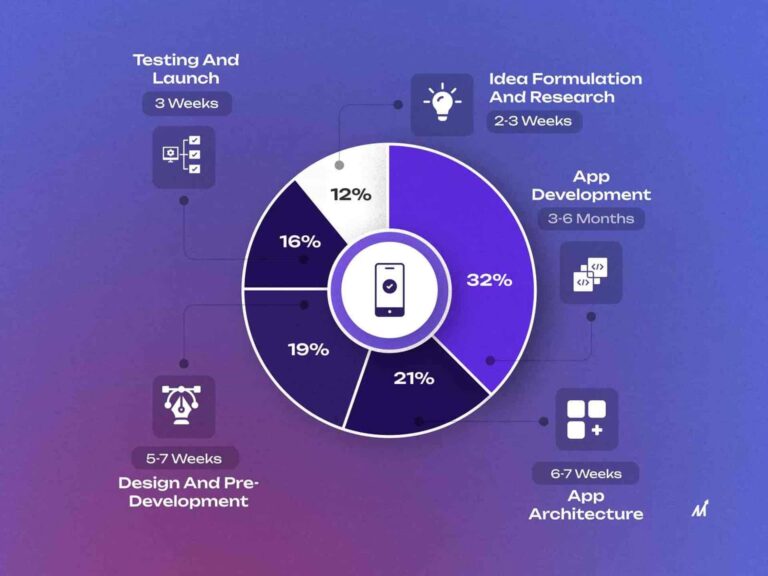
A comprehensive app development lifecycle diagram illustrating the sequential flow from discovery and strategy through design, prototyping, engineering, QA, deployment, and ongoing maintenance with feedback
A 2026 marketing dashboard displaying real-time GEO heatmaps, AI personalization scores, omnichannel attribution, and dark social referral tracking across 17+ platforms simultaneously. Trend 1: Generative