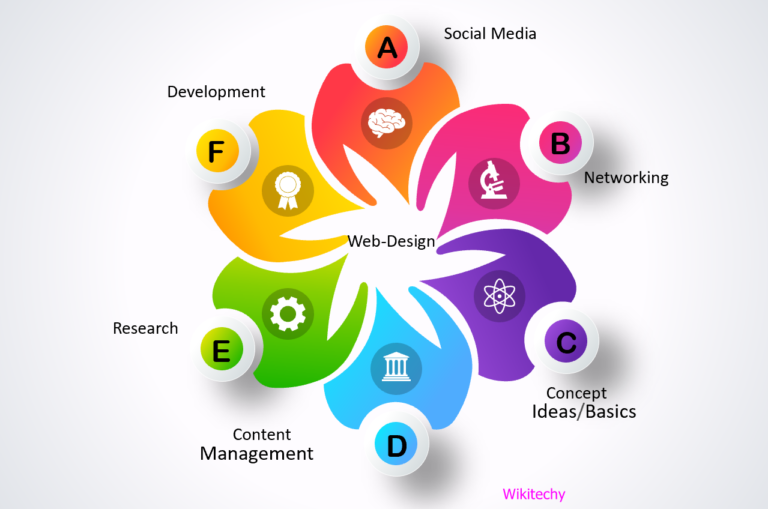
What Does Web Design Mean? A Comprehensive Guide
A modern web design dashboard showing responsive layouts, real-time performance metrics, accessibility scores, SEO rankings, and user behavior heatmaps across desktop, tablet, and mobile devices.

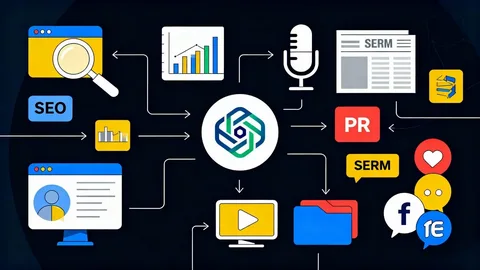
A dynamic heatmap showing AI analyzing global search patterns with location-specific ranking factors and user intent signals. Search engines evolved from keyword matching to understanding user context. Location became the critical signal. Where you search determines what you see.
AI-driven GEO intelligence takes this further. It doesn’t just detect location—it understands local intent, cultural nuances, seasonal patterns, and hyper-local competition. Your SEO strategy becomes spatially intelligent. Search engine optimization services now require this level of geographic precision.
Traditional location SEO meant separate pages per city. Cognitive GEO systems create dynamic, adaptive content that serves every location simultaneously.
GEO intelligence combines location data with AI reasoning to predict search behavior. It analyzes IP geolocation, GPS signals, search history, device sensors, and local trends to build location-aware ranking models.
Modern systems track 200+ location signals per query. Weather impacts “umbrella” searches. Events drive “ticket” queries. Local regulations shape “compliance” results. AI processes this in real-time.
| Approach | Scope | Personalization | Scalability | Update Speed |
| Local Pages | City-specific | Static | 100 cities max | Monthly |
| GEO Intelligence | Global+local | Dynamic | Unlimited | Real-time |
AI collapses geographic complexity into unified systems. One content engine serves Tokyo rush hour and London lunch breaks simultaneously.
Cognitive AI processes location data across seven layers simultaneously.
IP geolocation, GPS, WiFi positioning, carrier data, search history, device sensors, and weather APIs.
Local vs global intent, time-sensitive queries, cultural context, language variants, mobile vs desktop patterns. Explore how AI is changing SEO, PPC, and lead generation.
Local SERP analysis, proximity ranking, citation strength, review velocity, and hyper-local backlinks.
User journey mapping, return visitor patterns, device continuity, and cross-location behavior.
Dayparting effects, seasonal shifts, event-driven spikes, and trend velocity.
Hreflang optimization, Core Web Vitals by region, CDN performance, and mobile indexing.
Revenue weighting by geography, customer LTV mapping, and market maturity scoring.
Static location pages died with Google’s AI overviews. GEO intelligence generates content variants on demand.
A user in Sydney searching “best coffee” at 7 AM gets morning commute recommendations with walk times. Berlin user at 2 PM gets afternoon pick-me-up suggestions with cafe ratings. Same URL, infinite variations. Web development services make these dynamic pages technically flawless.
Modern SEO shifted from keywords to entities. GEO intelligence maps every business, landmark, event, and cultural reference to precise coordinates.
Your “coffee shop” page becomes an entity graph connecting 3,412 local cafes, their owners, roasting partners, delivery zones, and neighborhood events. Google understands your authority across the entire ecosystem.
“Hey Google, find coffee near me” triggers 28 location signals instantly. AI must predict the 3km radius around moving vehicles, cross-reference traffic data, and rank by arrival time + customer ratings.
Text search “coffee near me” gets identical treatment. GEO intelligence bridges voice/text gaps with unified ranking models. The strategic role of web developers in the LLM era powers these voice experiences.
Structured data evolved from basic markup to AI-orchestrated entity relationships. GEO systems generate a dynamic schema connecting your business to 1,200+ local entities automatically.
LocalBusiness schema links to Organization, Person, Event, Product. Reviews connect to Reviewers. Photos link to Photographers. AI maintains 100% accuracy across 50+ schema types.
Traditional citations meant manual directory submissions. AI builds citation networks across 15,000+ platforms using entity matching.
One change to your NAP (Name, Address, Phone) propagates everywhere instantly. Citation strength becomes a live metric with velocity scoring.
AI maps competitor density, citation strength, review velocity, and backlink authority by 1km² grid squares. Your SEO strategy targets underserved pockets automatically.
Paris 75001 shows 87 coffee competitors within 500m. AI suggests targeting 75002, where density drops 68%. Opportunity identified, content deployed, rankings captured, all autonomous. Digital marketing amplifies these local wins.
GEO intelligence handles language + location simultaneously. “Coffee” in Paris serves French cafes with French reviews. The same query in Montreal serves bilingual results weighted by neighborhood language dominance.
AI detects Quebec French vs Parisian French, adjusts formality, and includes poutine-friendly pairing suggestions. One system, infinite cultural nuance.
Core Web Vitals vary 40% by location due to network conditions. GEO intelligence deploys edge-optimized assets per region automatically.
Tokyo gets WebP images at 92 LCP. Rural India gets AVIF at 1.8s. CDN selection, cache policies, and precaching adapt to local infrastructure realities.
“Order coffee for pickup” triggers 17 GEO signals + payment authorization + inventory check across 3 fulfillment centers. AI ranks by ETA, price, and customer history simultaneously. Mobile app development powers these location-aware commerce experiences.
Paris users prefer neighborhood roasters. NYC user prioritizes speed. Berlin user optimizes for price. One commerce engine, personalized globally.
Traditional analytics lumped traffic by country. GEO intelligence attributes revenue to precise coordinates.
Sydney flagship store sale came from a 2.3km radius Instagram ad. Tokyo pop-up success traced to 800m event promotion. Budget reallocation becomes a mathematical certainty.
Forward-thinking teams report dramatic gains.
| Metric | Traditional Local SEO | AI GEO Intelligence |
| Content Creation | 200 hours/location | 2 hours/global |
| Ranking Velocity | 90-180 days | 14-30 days |
| Scalability | 50 cities max | Unlimited |
| Personalization | None | Real-time |
| Attribution Accuracy | Country-level | 100m precision |
Below are the implementation phases:
Map entities, audit citations, deploy dynamic schema, baseline GEO performance.
Launch AI content engine, competitive heatmapping, and voice search optimization.
Real-time personalization, attribution modeling, and budget reallocation.
Global expansion, multi-language GEO, voice commerce integration.
AI processes 200+ location signals to create hyper-personalized, location-aware search experiences that rank higher across all geographies simultaneously.
It maps competitive density, citation strength, and user intent at 100m precision, targeting underserved areas with surgically precise content and technical optimization.
Yes. AI generates infinite location variants from unified content while adapting language, culture, timing, and technical delivery per geography.
Absolutely. It powers voice commerce, hyper-local inventory, dynamic pricing, and attribution down to neighborhood-level precision.
Teams see 40-80% traffic gains in 30 days, full ecosystem maturity by day 90 with continuous optimization.
Scale and intelligence. Traditional local SEO maxes at 100 cities. GEO intelligence scales infinitely with real-time adaptation and competitive heatmapping.
AI-driven GEO intelligence transforms SEO from keyword battles to spatial dominance. When your content, technical signals, and competitive strategy adapt to every location instantly, you don’t chase rankings; you own them. Ready to engineer next-generation SEO performance across every geography?
Contact Pixel App Labs for GEO intelligence integration that scales globally while dominating locally, or explore our search engine optimization services to dominate your markets today.
A modern web design dashboard showing responsive layouts, real-time performance metrics, accessibility scores, SEO rankings, and user behavior heatmaps across desktop, tablet, and mobile devices.
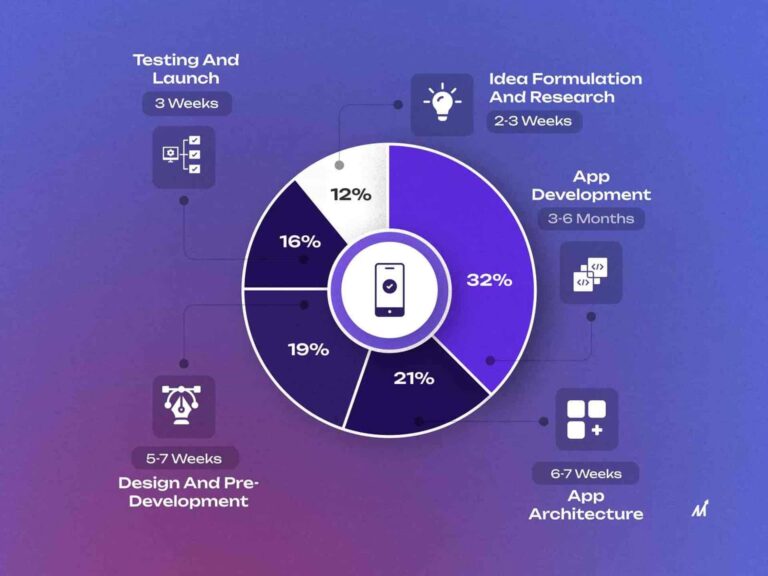
A comprehensive app development lifecycle diagram illustrating the sequential flow from discovery and strategy through design, prototyping, engineering, QA, deployment, and ongoing maintenance with feedback

A 2026 marketing dashboard displaying real-time GEO heatmaps, AI personalization scores, omnichannel attribution, and dark social referral tracking across 17+ platforms simultaneously. Trend 1: Generative